THE ROOM EDIT / 01
How to Choose Wall Art for a Small Room
One wall. One good idea. A layout you can test before ordering.
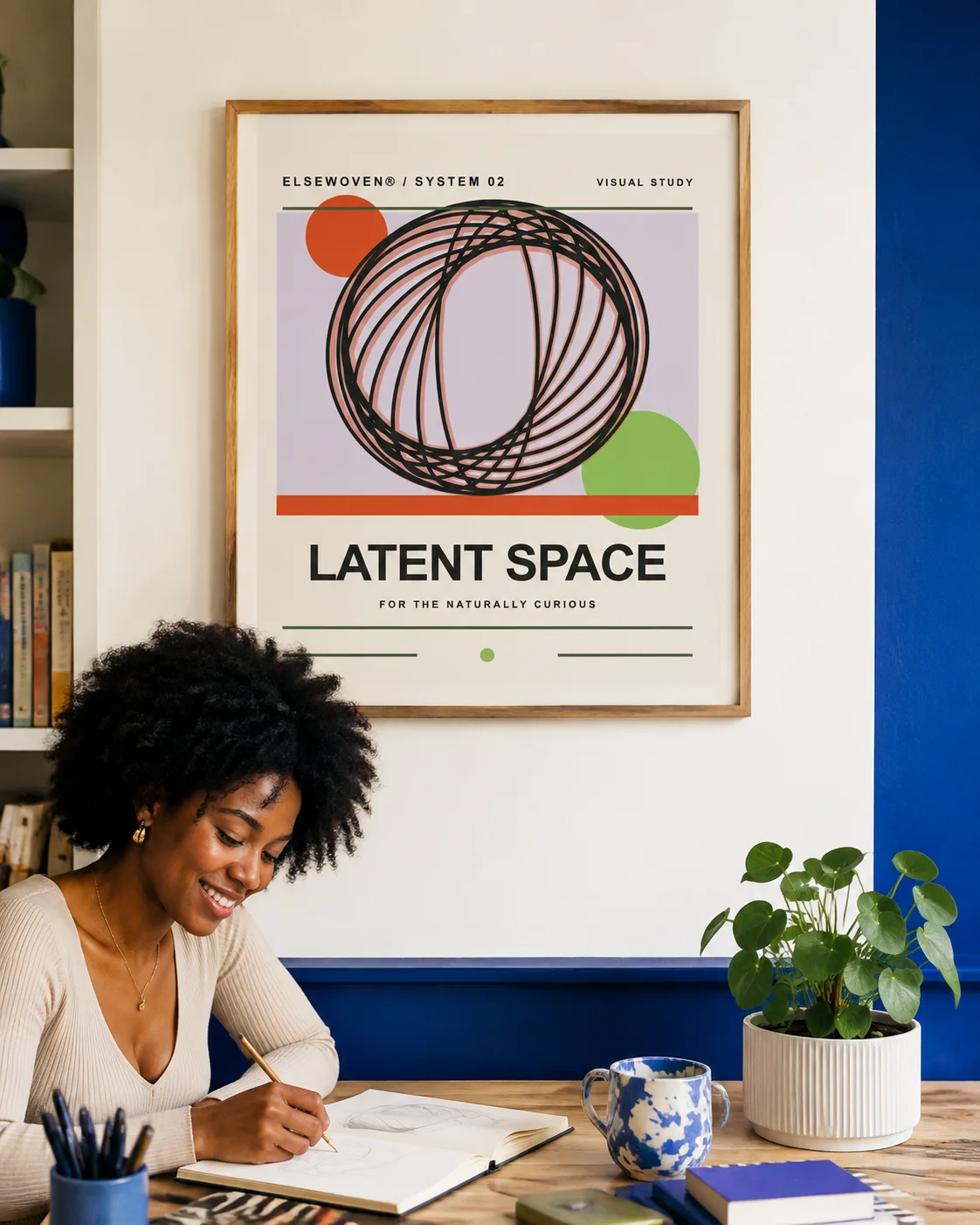
Choose wall art for a small room by measuring the usable wall, testing the full framed size, and deciding where you want the eye to land. A small room does not automatically need a tiny print. One well-placed piece can be easier to live with than several unrelated pictures competing with shelves, lamps and furniture.
This guide walks through a simple planning method you can use before ordering. The layout suggestions are starting points to test in your room, not rules that guarantee a room will look larger.
Start with the wall you actually have
Measure the clear width and height where the artwork would hang. Include the space above furniture, and mark obstacles such as switches, vents, shelving and a door's swing. The usable wall can be much smaller than the wall's total dimensions.
Then take a photo from the doorway and from the seat you use most. A piece above a desk may look balanced from the entrance but feel crowded when you sit beneath it. Check both views before choosing a size.
- Measure the furniture below the artwork.
- Note the clearance above the furniture and below the ceiling.
- Decide whether this wall should be the room's main visual focus.
- Check nearby objects that already draw attention.
Test the frame size, not only the paper size
A print's listed dimensions describe the print. A mat and frame can make the finished object larger. Ask for the outside frame dimensions before you order, especially for a narrow wall or a space between shelves.
Cut a paper rectangle or use removable painter's tape on a suitable wall surface to outline the proposed outer dimensions. Test the tape in an inconspicuous area first and follow its instructions. Leave the outline up while you use the room. Look at it in daylight and with your evening lighting.
For an illustrative calculation, an 18-by-24-inch print with a two-inch mat on each side would need a 22-by-28-inch opening before accounting for the frame's outer width. Actual mat openings may overlap the paper, so use the framer's finished dimensions rather than treating this calculation as an ordering specification.
If the outline feels crowded, test a narrower frame, a different location or another print size. Do not assume you can crop the artwork without losing part of the design.
Choose one focal point or a deliberate small grouping
A single piece is a useful starting point when the room already has patterned textiles, open shelving or a busy desk. It gives you one shape to position and one frame finish to coordinate.
A pair or small group can work when the images share a visual connection. Choose that connection deliberately: a repeated color, similar linework or a common subject. Plan the whole group's outside dimensions, including the gaps, before hanging individual pieces.
| Room situation | Layout to test |
|---|---|
| Narrow wall beside a door | One portrait-oriented piece with clearance for the door |
| Small desk with shelves nearby | One piece centered on the desk area, with space from shelving |
| Quiet wall above a compact sofa | One piece or a coordinated pair, tested against the sofa width |
| Already busy room | A simpler composition and fewer competing frames |
Start with the artwork visually related to the furniture below it, then adjust after viewing it from across the room. Centering on the entire wall is not always the most comfortable arrangement when the furniture sits off-center.
Use color to connect the room
Choose a color that already appears in something you plan to keep, such as a cushion, chair, rug or desk accessory. It does not need to match exactly. A repeated accent can help a graphic print feel intentional without requiring every object to share a palette.
Alternatively, let the art introduce the room's main accent color and keep nearby objects quieter. Test a product image beside a photo of the room, while remembering that screens and printed colors can differ. A mockup is useful for understanding the design, but it cannot prove how the print will look under your lighting.
Check light, reflections and paper care
Notice whether the proposed wall receives direct sunlight. The Library of Congress recommends minimizing light exposure and avoiding direct or intense light for works on paper. Its paper preservation FAQ also explains that UV-filtering glazing does not remove every risk from light. Keep a paper print away from direct sun rather than relying on a frame to make fading impossible.
Before selecting glazing, look for reflections from windows and lamps at your usual viewing angle. Ask a framer about suitable mounting and materials, especially for a valuable or irreplaceable work. Follow the frame and hanging hardware instructions for the wall material and finished weight. In a rental, check the lease before making holes or using adhesives.
Where ELSEWOVEN art prints fit
The current Latent Space listing identifies an 18-by-24-inch Enhanced Matte Paper Poster. That is the print size to begin with when planning this particular piece. A lifestyle image shows it framed in a room, but a styled image does not establish that a frame is included. Confirm the exact contents and finished frame dimensions for your intended order.
The listed paper specifications describe the print medium, not a promise that the colors on your screen will match the delivered print under every light. Use the exact artwork view to inspect the composition, then use the room image as inspiration rather than a measurement reference.
ELSEWOVEN's art prints collection offers graphic designs drawn from its visual language of systems, patterns and human curiosity. Start with the design you enjoy looking at, then check the product's listed dimensions and details against your wall plan.
For example, compare the composition of Latent Space Print with your room's existing shapes. Use the product page to confirm the current size, paper details and purchase options. Check what is included before budgeting for a frame or mat separately.
Your before-buying checklist
- Measure the usable wall and furniture below it.
- Get the finished frame dimensions.
- Test the outline from the doorway and your usual seat.
- Choose a clear focal point or a planned grouping.
- Check sunlight and reflections.
- Confirm mounting requirements and the full print-and-frame cost.
- Review the exact product details before ordering.
Your next step is simple: pick one wall and test one full-size outline. Once the placement feels comfortable, browse the art prints with those measurements beside you.
By ELSEWOVEN Editorial. The current product listing and Library of Congress guidance were reviewed October 14, 2026. Room arrangements are editorial suggestions. The illustrative mat calculation is not an ordering specification or a guarantee of visual effect.